Infrared Emitter Manufacturing & Supply Capabilities
Infrared emitters are available in a variety of wavelengths and output configurations. This page provides a structured overview of infrared emitter options based on wavelength selection and replacement needs.
Select by Wavelength or Replacement Needs
Infrared emitters emit infrared light at specific wavelengths and beam angles, serving as a light source in infrared signaling and control applications. Selection is typically based on wavelength preference, physical specifications, and output power.
They offer higher radiative efficiency and stronger emission intensity under similar driving conditions.

They provide lower visible light radiation and are widely used for general infrared transmission.

Suitable for applications requiring specific optical filters, sensors, or system requirements.

Projects that replace existing infrared emitters should maintain continuity with the existing design.
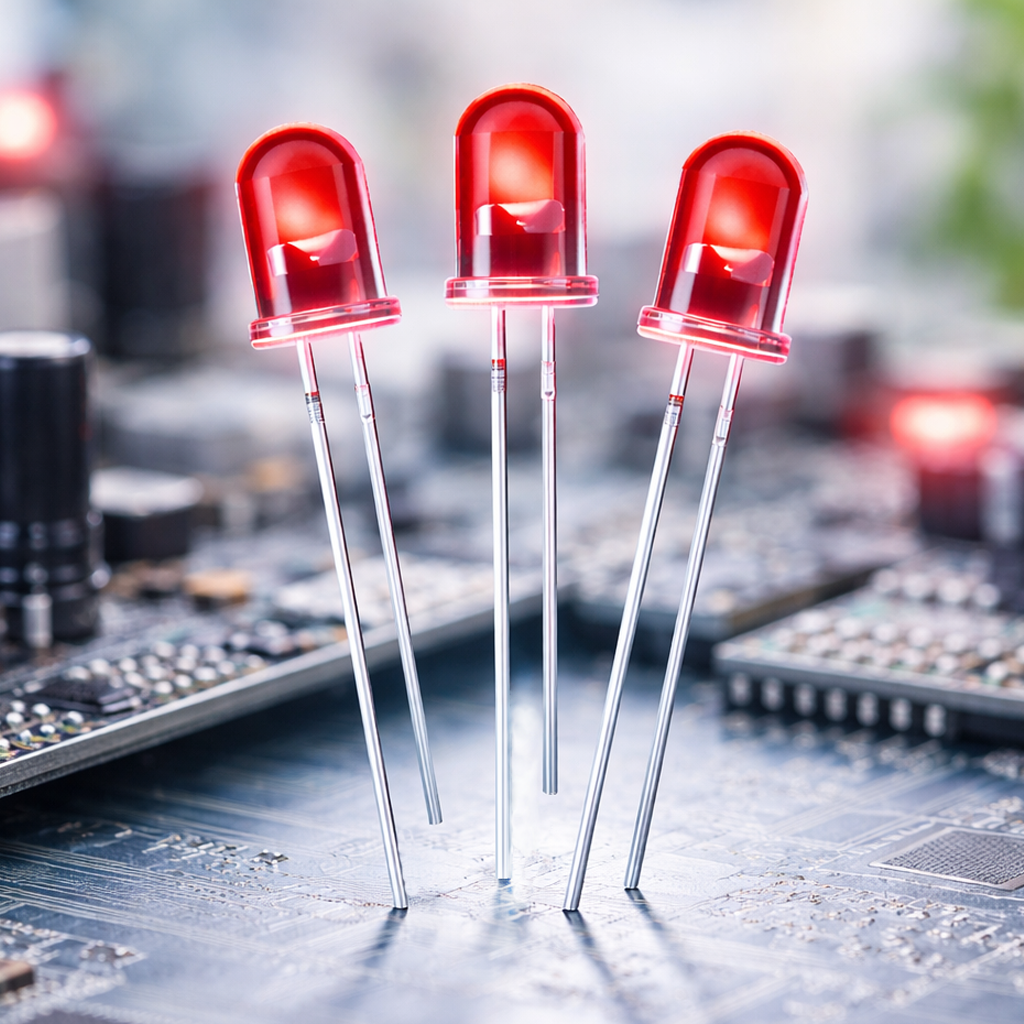
Representative IR Emitter Form Appearance
The infrared emitter options we provide are designed to support stable system behavior rather than isolated parameter targets. Product selection should occur after feasibility assessment, not before.


Emitter Performance Characteristics

Defines the distribution of infrared light emitted from the transmitter.

Represents the infrared energy emitted under specific operating conditions.

Available in through-hole, surface mount, and some high-output packages.

The output characteristics are determined by the specified drive current and signal characteristics.
Typical Infrared Transmission Applications
IR transmitters are commonly used in:
- Remote control signal transmission
- Infrared communication
- Optical triggering and signaling
- Presence and proximity-related systems


Emitter Configuration & Selection Options
- Wavelength selection
- Beam angle choices
- Package and lead configuration
- Output grading options
Yes. Additional wavelength options are available for specific needs.
Yes. Replacement options are available based on wavelength, package, and output characteristics.
850 nm may exhibit a faint visible glow, while 940 nm typically appears less visible.