

IR Receiver Compatible with TSOP1838 | DY-0038
Compatible alternative to the TSOP1838 infrared receiver
•Carrier Frequency: 38kHz
•Operating Voltage: 2.5V – 6.0V
•Receiving Distance: 8-30 meters
•Receiving Angle: +—45°
•Operating Temperature: -25°C ~ 85°C
•Package: 3-pin DIP
Stable Performance in Complex Lighting Environments
The DY-0038 IR receiver is designed to be compatible with several widely used 38kHz infrared receiver modules, including TSOP1838, HS0038, and IRM3638.
Often used in environments where sunlight, LED lighting, or fluorescent lamps can introduce signal noise.
The DY-0038 IR receiver is designed to maintain reliable operation under these conditions through integrated technologies such as optical filtering, 38kHz band-pass filtering, automatic gain control (AGC), and noise suppression circuits.
By focusing on modulated infrared signals and filtering out unwanted interference, the receiver helps ensure stable signal detection and accurate command recognition in everyday operating environments.
For Stable Signal Detection
DY-0038 IR receiver 38kHz Carrier Frequency
- High Sensitivity – Reliable detection of modulated IR signals
- Integrated Demodulation – Clean digital output for easy MCU processing
- Anti-Interference Design – Reduces impact from ambient light and electrical noise
- Through-Hole Package – Easy PCB installation and wide design compatibility
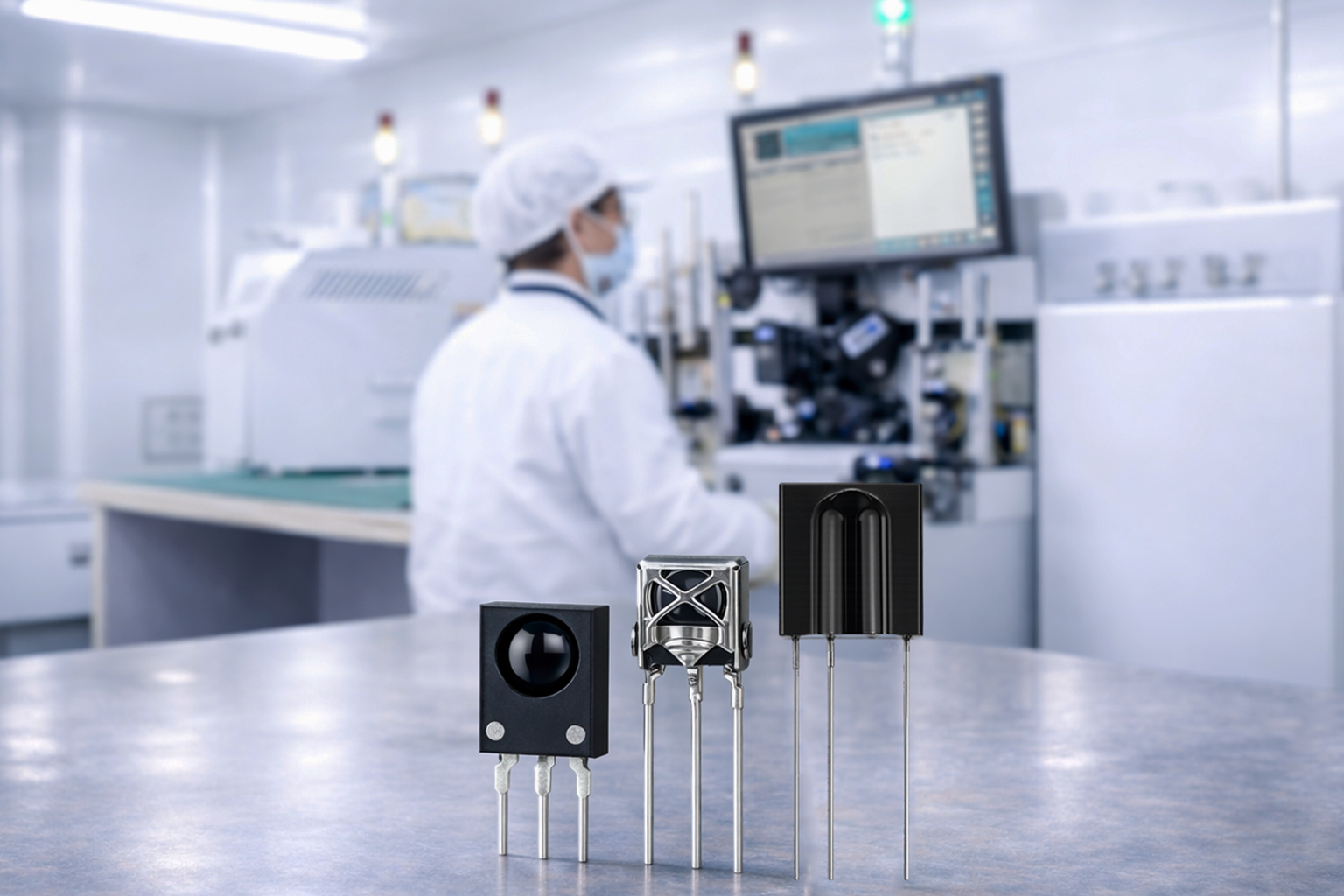
Compatible with Multiple Industry Models
DY-0038 can be used as a compatible option for widely used 38kHz IR receiver modules, including:
- TSOP1838 series
- HS0038 series
- IRM3638 series
This compatibility makes DY-0038 suitable for component replacement, new product design, or supply chain diversification.
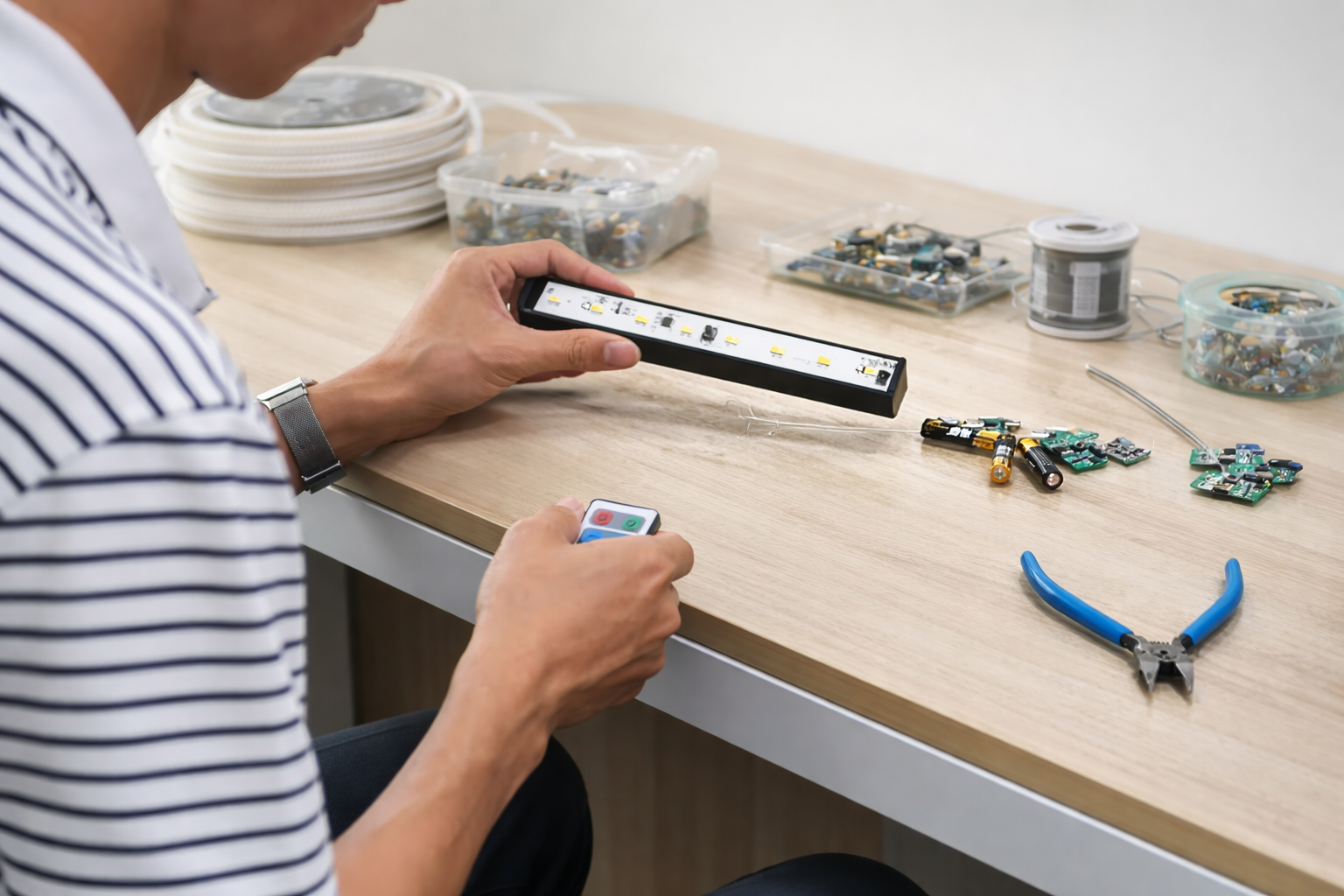
Suitable for Remote Control
38kHz IR receivers remain widely used in infrared remote control systems across many electronic products, including:
- Home appliances
- Smart home controllers
- Set-top boxes
- Consumer electronics
- Small electronic devices
Stable reception helps ensure consistent remote control response and user experience.


Engineering-Oriented Product Support
Component selection often requires practical verification within the system design.Engineering samples are available to support evaluation of reception distance, signal stability, and TX/RX matching performance, helping engineers validate product compatibility before entering mass production. We support:
- Product development and testing
- Component replacement evaluation
- Stable sourcing for production projects

DY-0038 IR Receiver Product Parameters
- Parameter
- Inquiry & Supply Process
| (P/N) | Operating voltage | Quiescent Current | Receiving distance | Pin length | Pin spacing | Features |
| DY-0038WXX | 2.5-6.0v | 50-1200μA | 8-30m | 22-43 mm | 1.27/2.0/2.54mm | Long distance |
| DY-0038VXX | 2.5-6.0v | 50-1200μA | 8-30m | 22-43 mm | 1.27/2.0/2.54mm | Low power consumption |
| DY-1838BXX | 2.5-6.0v | 50-1200μA | 8-30m | 22-43 mm | 1.27/2.0/2.54mm | Anti-light interference |
| DY-0038FXX | 2.5-6.0v | 50-1200μA | 8-30m | 22-43 mm | 1.27/2.0/2.54mm | High sensitivity |
| DY-0038AXX | 2.5-6.0v | 50-1200μA | 8-30m | 22-43 mm | 1.27/2.0/2.54mm | Anti-5G, Wifi |
| DY-0038XXX | 2.5-6.0v | 50-1200μA | 8-30m | 22-43 mm | 1.27/2.0/2.54mm | Continuous decoding |
| DY-0038CXX | 2.5-6.0v | 50-1200μA | 8-30m | 22-43 mm | 1.27/2.0/2.54mm | Narrow code decoding |
The same appearance, different features are emphasized. Please contact our technical staff if needed.
Inquiry Submission
Submit your inquiry request, providing the required model, specifications, or compatible brand model (for example, VS1838B). At the same time, we can also provide basic technical information and application requirements for reference.
Technical Evaluation
Engineers will recommend suitable infrared receiver models based on the application scenario to ensure compatibility with system design and signal requirements.
Sample Arrangement
Provide engineering samples for functional verification, including reception distance, signal stability, and circuit compatibility.
Engineering Confirmation
After testing and validation, confirm key parameters and product specifications to support subsequent project development.
Mass Production Supply
Arrange stable mass production supply to support the customer’s production plan, ensuring product quality is stable and reliable.
Reliable infrared reception depends on both signal filtering and stable demodulation. The DY-0038 IR receiver integrates several internal circuits designed to maintain stable signal detection, including:
- 38kHz carrier frequency optimization
- Internal band-pass filtering
- Automatic gain control (AGC)
- Ambient light suppression
- Digital signal demodulation output
These integrated functions help the receiver maintain stable decoding and accurate signal recognition, even in environments affected by sunlight, LED lighting, or electrical noise.
In infrared communication systems, the carrier frequency determines signal compatibility and noise resistance.The 38kHz frequency has become the most widely adopted standard because it offers a practical balance between:
- Transmission distance
- Interference resistance
- Compatibility with existing remote control protocols
As a result, most infrared transmitters and receivers are designed around 38kHz modulation, making components like DY-0038 suitable for a wide range of remote control applications.
Many electronic products remain in the market for several years, which makes component stability and supply continuity essential. The DY-0038 IR receiver is manufactured through controlled production processes designed to maintain consistent electrical performance across batches. This helps manufacturers reduce risks related to component replacement or redesign during long product lifecycles.
In many infrared remote control designs, DY-0038 can function as an alternative option for commonly used 38kHz receiver modules. Before implementation, engineers typically verify:
- Pin configuration
- Operating voltage range
- Output signal characteristics
- System reception distance
System-level testing ensures that the receiver performs reliably within the intended device design.
Yes. Engineering samples are available to support product development and system verification.Engineers often evaluate receivers through tests such as:
- Reception distance measurement
- Ambient light interference evaluation
- Remote control signal compatibility testing
- Overall system stability verification
Conducting these evaluations early helps ensure smooth transition from development to mass production.