LED chips come in a wide variety of models on the market. Many manufacturers of smart home devices, consumer electronics, and home lighting often ask: “Which is the best LED chip?” In reality, there is no such thing as “the best LED chip.” The key lies in whether it matches your application scenario, manufacturing requirements, and long-term stability needs.
Common LED Chip Model Classification
Based on the article “Differences Between SMD LEDs, DIP LEDs, and COB LEDs,” we understand the distinctions between various LED chip types and have gained a basic concept of LED chips. In the actual selection process, decisions are typically made based on the following aspects:

Classified by Package Structure/Appearance
Common package structures include through-hole/DIP LEDs and surface-mount LEDs. Additionally, certain specialized packages (such as high-power or multi-chip types) are primarily produced on a custom basis. Common LED chip models include:
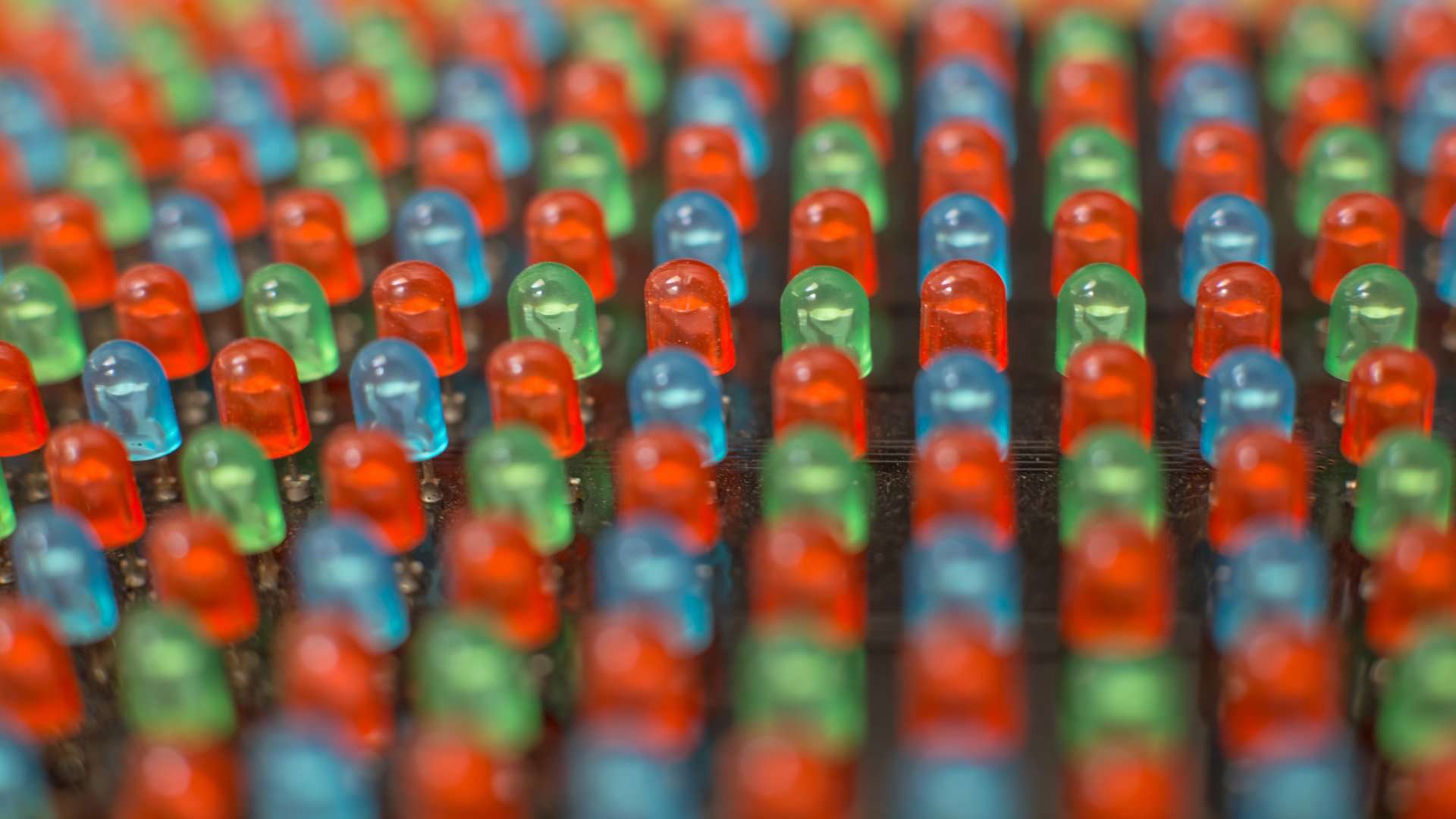
Through-Hole: 3mm LED, 5mm LED, 8mm LED, 5mm Oval LED, 234 Square LED, 255 Square LED, etc.
Surface Mount: 3528 LED, 5050 LED, 2835 LED, 5730 LED, 3030 LED, 3535 LED, etc.
Special Packaging: In the LED industry, special packaging typically refers to single-chip power ≥ 1W (3W / 5W / 10W and above) or multiple chips integrated within a single package. Examples include 5mm High Power LEDs, 3535 High Power LEDs (1–3W, 1–2 chips), 5050 Multi-Chip LEDs, 5050 RGB (3-in-1), and 5050 RGBW (4-in-1).
Beyond structural differences, pay attention to the desired LED appearance, such as resin color and lead length.

Classification by Light Color / Wavelength Band
LED light colors are categorized into visible and invisible light. Within the LED industry, light color is primarily described using wavelength bands (nm) or color temperature (K). When selecting products, utilizing specific parameter information for model selection enhances the accuracy of the selection process.
Single color LEDs (Visible Light): Red: 620-625nm Standard Green: 566-571nm Emerald Green: 520-525nm Blue: 460-465nm Yellow: 585-590nm Orange: 600-605nm Violet: 390-405nm
White LED: White light encompasses three variants—cool white, standard white, and warm white—corresponding to color temperatures of 2800-3200K, 5500-6500K, and 7500-20000K, respectively. Relying solely on the term “white light” without considering specific color temperature parameters often leads to mismatches in visual effects, usage environments, or application requirements.
IR LEDs (invisible light): 850nm and 940nm infrared LEDs represent the most common and mature infrared bands, frequently used for sensing and remote control applications.
RGB / Multi-color LEDs: Red-Green-Blue (Common Cathode/Common Anode), Red-Green, Red-Blue, Yellow-Blue, etc. When selecting RGB / multi-color LEDs, in addition to considering the color combination itself, it is essential to simultaneously verify the chip wavelength band and the common cathode/common anode structure.
Classification by Product Performance
After understanding the basic structure, packaging type, physical dimensions, and color parameters of LED chips, their suitability for your product and ability to highlight advantages extend beyond mere appearance or model number. The true deciding factor lies in the performance characteristics of the LED chip.
Brightness and Luminous Efficiency: Prioritize high-efficiency products that meet required brightness levels while avoiding drawbacks like high energy consumption and excessive heat generation. “Brighter isn’t always better”—aim for stable output that precisely meets specifications.
Beam Angle: Options include 15°, 30°, 45°, 60°, and 120°. Select angles that offer optimal matching and visual presentation to prevent bright spots or dark zones.
Color Temperature / Wavelength Accuracy: After determining the LED chip’s wavelength band/color temperature, account for color variation between chips to ensure batch consistency and uniform brightness—critical for visual presentation.
Environmental Adaptability: LED chips must demonstrate robust adaptability across diverse applications. Key considerations include high-temperature stability, resistance to light decay, and tolerance for vibration and impact.
Selection Approach for Different Application Scenarios
LED chips lack universally standardized specifications, as varying application scenarios demand distinct requirements for brightness, stability, lifespan, and environmental adaptability.
Indicator/Status Display Applications
In these cases, LED chips typically need to deliver clear, bright illumination during operation while maintaining long-term stability and low power consumption. We recommend selecting chips with moderate brightness, uniform color temperature, consistent performance, and suitability for prolonged power-on operation. We typically recommend: 3mm/5mm through-hole LEDs, 5mm high-brightness through-hole LEDs (low-current versions).
Indoor/Outdoor Lighting Applications
For lighting, emphasis is placed on luminous efficacy, heat dissipation capability, and environmental adaptability. A balanced approach considering brightness, heat management, and lifespan is essential, rather than solely focusing on power output. We recommend: 2835/3030 medium-power LEDs (indoor), 3535/5050 high-power LEDs (outdoor/functional lighting), 10W/20W/50W COB LEDs (flood lighting).
Control Panels / Home Appliances
These products prioritize stability and structural compatibility while balancing cost and performance. Options include: 0603 / 0805 / 1206 SMD LEDs, 3528 / 2835 SMD LEDs, and 5mm short-lead through-hole LEDs.
Regardless of application scenarios, LED chip selection should first clarify core requirements, then determine key performance parameters, followed by specifying the packaging type to match the corresponding specific model.
Only by fully understanding the differences in structure, parameters, and suitable applications among various LED chips can common issues be effectively avoided. For manufacturers and equipment suppliers, long-term stability and system compatibility are often more critical, as these directly impact product consistency, reliability, and overall lifespan.
Should you have any questions during your LED chip selection process, feel free to contact DOGYIR at any time. As a professional manufacturer with years of LED chip production experience, we can efficiently match the “most suitable LED chip solution for your specific application scenario” based on your unique requirements.
FAQ
How should I select the color temperature for white LEDs?
Determine based on the application environment: Choose warm white (2800–3200K) for ambiance and comfort, standard white (5500–6500K) for general lighting, and cool white (7500–20000K) for high brightness or scenarios requiring high clarity.
Why are RGB/multi-color LEDs categorized as common cathode or common anode?
Different polarity structures correspond to distinct drive methods and control logic. Unconfirmed polarity may cause circuit incompatibility or abnormal brightness control.
What distinguishes 850nm and 940nm infrared LEDs?
850nm offers higher emission efficiency and longer range; 940nm emits weaker visible red light, providing better concealment.
How to choose between Through-Hole and Surface Mount Device (SMD) LEDs?
Select based on product structure and production methods. Through-Hole LEDs are better suited for applications requiring mechanical strength, soldering stability, or visible height; SMD LEDs facilitate automated production and high-density layouts.
Should consistency be considered for indicator applications?
Yes. For applications like equipment panels or array indicators, prioritize brightness consistency to ensure uniform overall display effects.