If you are a manufacturer of televisions, air conditioners, or surveillance systems, and have higher requirements for remote control sensitivity, sensor response speed, or night vision performance, this article will help you understand how to effectively improve product performance and reduce costs.
Today, let’s learn infrared light-emitting diodes (IR LEDs).
What is an Infrared LED?

An Infrared LED, or infrared light-emitting diode, is an optoelectronic component capable of emitting infrared light with longer wavelengths. Infrared systems typically consist of two distinct components: an IR transmitter and an IR receiver, which are often used in pairs. Today, we will primarily introduce the IR transmitter. The light they emit is invisible to the human eye (with wavelengths ranging from approximately 760nm to 1000nm). While undetectable by human vision, it can be detected by infrared receivers, surveillance cameras, sensors, and similar devices.
Operating Process of IR LEDs
The IR LEDs we observe primarily consist of P-N junction semiconductors internally. The P-side contains a large number of holes (positive charge carriers), while the N-side contains a large number of electrons (negative charge carriers). When P-type and N-type materials come into contact, a P-N junction is formed. Depletion layers form on both sides of the P-N junction. Without external voltage interference, the P and N regions remain in a static state—current is nearly zero, electrons cannot move freely, and the internal electric field reaches a static equilibrium.

When an external voltage is applied to the IR LED, the electric field changes, altering the movement of electrons and holes. Depending on the voltage polarity, two distinct scenarios occur at the P-N junction:
Forward voltage (positive terminal connected to P-region, negative terminal to N-region)
Current flows as electrons move from the N-region toward the P-region, while holes move from the P-region toward the N-region. At the junction interface, electrons and holes meet and recombine. During recombination, excess energy is released as infrared photons, emitting infrared light.
Reverse voltage (positive terminal connected to N-type region, negative terminal connected to P-type region)
Here, the external electric field aligns with the built-in electric field, widening the depletion layer. This prevents free charge carriers from crossing the potential barrier, resulting in negligible conductivity across the P-N junction.
What are the advantages of IR LEDs?
All LEDs have a point of maximum relative light radiation, corresponding to a specific wavelength known as the peak wavelength. This wavelength is typically determined by the bandgap width of the semiconductor material or the energy level position of the light-emitting center.

The operating principle of IR LEDs is fundamentally similar to that of ordinary LEDs, differing only in the color of light emitted.
*Ordinary LEDs: Visible light (red, orange, yellow, violet, green, blue, etc.);
*IR LED: Wavelengths between 760nm–1000nm (infrared light), which is invisible to the human eye.
However, it is precisely the unique light characteristics of IR LEDs that give them the following typical features:
Unique Emission Wavelengths
Common IR LED wavelengths include 850nm, 880nm, and 940nm, each suited for specific applications. For instance, 850nm is frequently used in night vision cameras or certain surveillance equipment detection systems. The complete invisibility of 940nm makes it ideal for remote controls or security installations.
Diverse Beam Angles
IR LEDs feature broad emission angles (10°–120°). Notably, narrow-angle (10°–30°) LEDs concentrate light for superior long-distance signal transmission, while wide-angle (60°–120°) LEDs diffuse light for broader coverage.
Low Operating Voltage with 38kHz–56kHz High-Frequency Modulation Support
IR LEDs typically operate at a forward voltage of 1.2V–1.5V, consuming minimal power while offering rapid response and a lifespan of up to 50,000 hours. They support 38kHz–56kHz high-frequency modulation, ensuring stable and accurate signal transmission even in complex environments like noisy areas, Wi-Fi interference, or outdoor settings.

Additionally, different “package types” often influence beam angle and transmission distance. We need to flexibly select IR LEDs with varying “packages” based on the design requirements of the developed equipment and installation convenience.
Common package types fall into two main categories:
*DIP IR LED: Commonly found in 3mm or 5mm round-head packages, suitable for through-hole soldering and manual installation;
*SMD IR LED: Packages like 0603, 0805, 1206, and 3528, compatible with automated pick-and-place assembly for higher efficiency.
Application Fields
Although IR LEDs cannot serve as illumination sources, their unique properties bring significant convenience to numerous sectors of daily life, including industrial applications, home appliances, security systems, and medical devices. By exploring the application fields of IR LEDs, you can gain a deeper understanding of where these components are integrated into our lives.
Remote Control Systems
IR LEDs are commonly integrated into remote controls as transmitters, sending modulated signals. Receivers within home appliances act as receivers, decoding these signals and executing corresponding commands.
Security and Surveillance
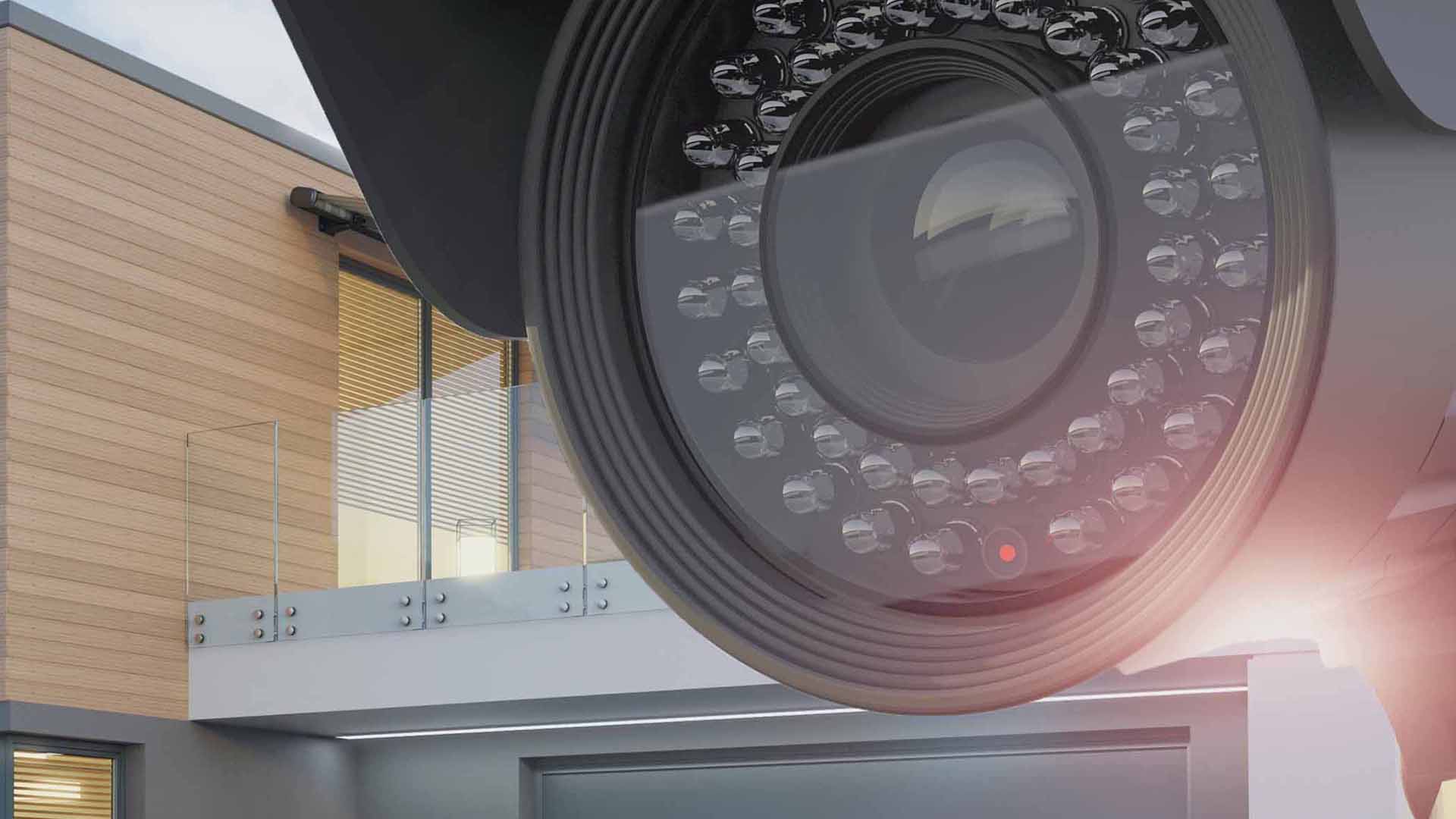
Security installations are ubiquitous in our daily lives, covering streets and alleys. The night vision capability of surveillance cameras relies heavily on IR LEDs. Typically employing 850nm wavelength infrared emitters, they deliver clear, stable night vision images in low-light conditions.
Medical and Health Monitoring
Beyond common household appliances, security systems, and industrial sensors, numerous medical devices rely on IR LEDs. For instance, pulse oximeters and heart rate monitors often combine IR LEDs with photodiodes to detect blood oxygen levels and pulse changes.
It is evident that IR LEDs have become ubiquitous in our daily lives and industrial applications—from remote control transmission to smart sensing, from night vision surveillance to health monitoring. Despite being a small electronic component, it delivers unimaginably powerful functionality. If you are seeking a high-quality IR LED, this article offers valuable guidance.
Should you have any questions during selection or assembly, please feel free to contact DOGYIR Optoelectronics. We will assign a professional technical engineer to assist you, ensuring your product performance and efficiency are maximized.
FAQ:
What are the commonly used infrared transmitter/receiver models?
Common types are generally categorized into three types: infrared transmitters (IR LEDs), infrared receivers (phototransistors), and integrated reflective types (transmitter and receiver). Examples include 3mm IR Tx/Rx, 5mm IR Tx/Rx, 5mm square seat IR Tx/Rx, and 3528 IR Tx/Rx…
What is the commonly used wavelength of IR LED?
Commonly used wavelengths are 850nm and 940nm. 850nm can be captured by some cameras, while 940nm is completely invisible.