

IR Receiver Compatible with VS1838B | DY-1838K
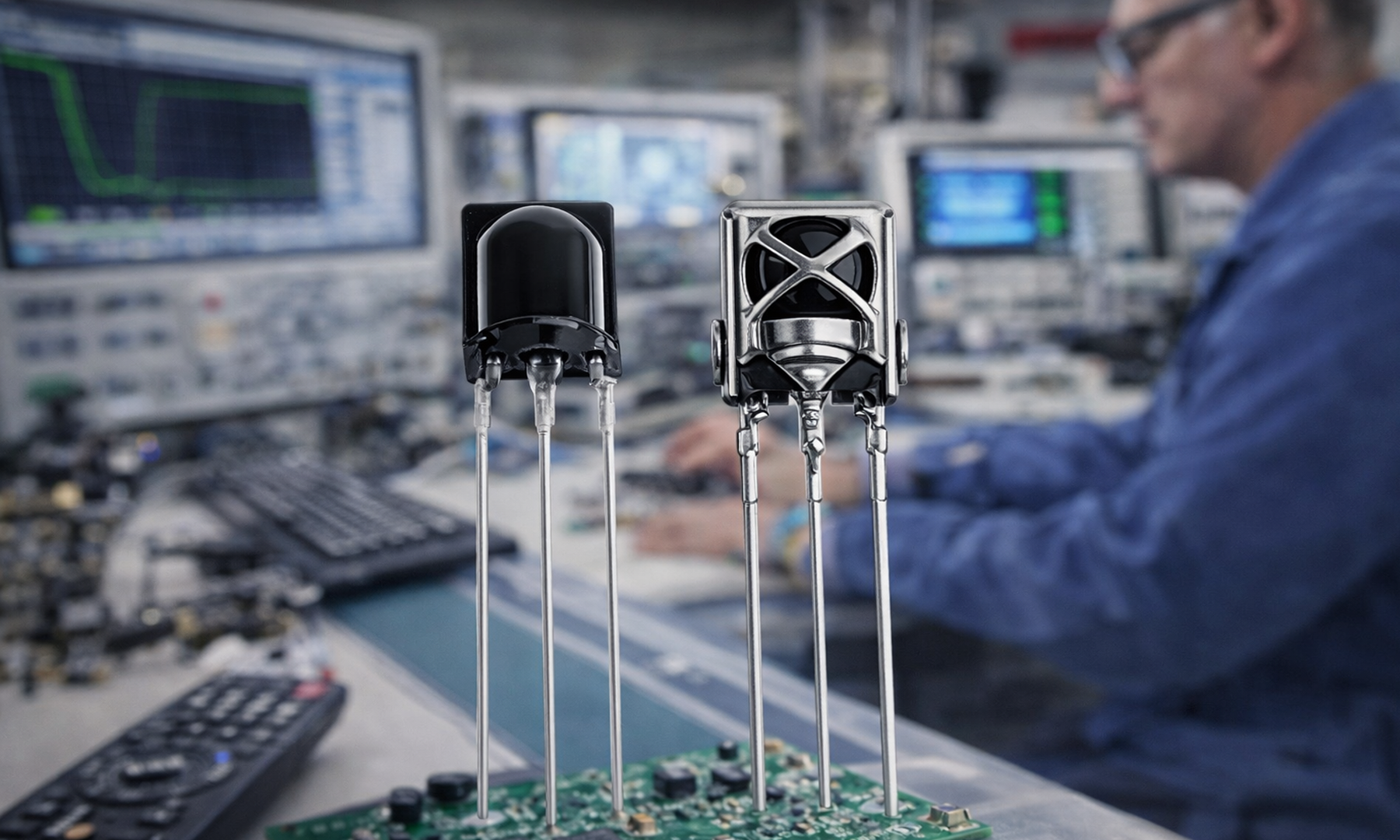
- Metal shielding enclosure for strong anti-interference
- Pin pitch: 2.54mm, supports 90° side-bend and Z-shaped customization
- Supports a wide range of lead lengths, from approximately 3mm to 40mm.
- Receiving distance/angle: 10-35m / ±45°-±60° optional
- Supports mainstream carrier frequencies: 36kHz, 38kHz, and 56kHz.
- Standard bag packaging; other packaging options available upon request
- RoHS/REACH compliant
VS1838b Compatible 38kHz IR Receiver
VS1838b – A commonly referenced model widely used in open market modules. DY-1838K – A compatible alternative model designed by the manufacturer DOGYIR.
Both VS1838b and DY-1838K are 38kHz infrared receivers, specifically designed to receive remote control signals. The electrical characteristics of the two models are very similar and are generally used in the same application circuits. They are suitable for remote control systems and consumer electronics. The design of DY-1838K is compatible with VS1838b in most infrared remote control circuits, engineers to use it as an alternative receiver for product development or mass production projects.
Why Choose Our DY-1838K IR Receiver
• Low power consumption, stable decoding
• Strong resistance to ambient light interference
• Built-in infrared demodulator and amplifier
• Optimized for 38kHz IR remote control signals
• Stable performance in mass production
• Supports OEM production & long-term supply
• Flexible customization
Considerations for Replacement
When replacing infrared receivers such as VS1838b, the following factors should be considered:
• Carrier Frequency
Match the transmitter frequency (commonly 38kHz).
• Decoding Behavior
Different receiver ICs may respond differently to burst signals.
• Ambient Light Immunity
Resistance to fluorescent lighting and sunlight.
• Application Environment
Receiving distance and installation direction.
• Mechanical Compatibility
Package size, pin configuration, and PCB layout.
IR Receiver Applications
IR receivers using the VS1838b structure are widely used in various electronic control systems, such as:
•TV remote control systems
•Set-top box control systems
•Air conditioner remote control systems
•Home appliance control boards
•Smart home devices
•Consumer electronics
•Electronic control boards
•Embedded control systems

Engineering & Compatibility Support
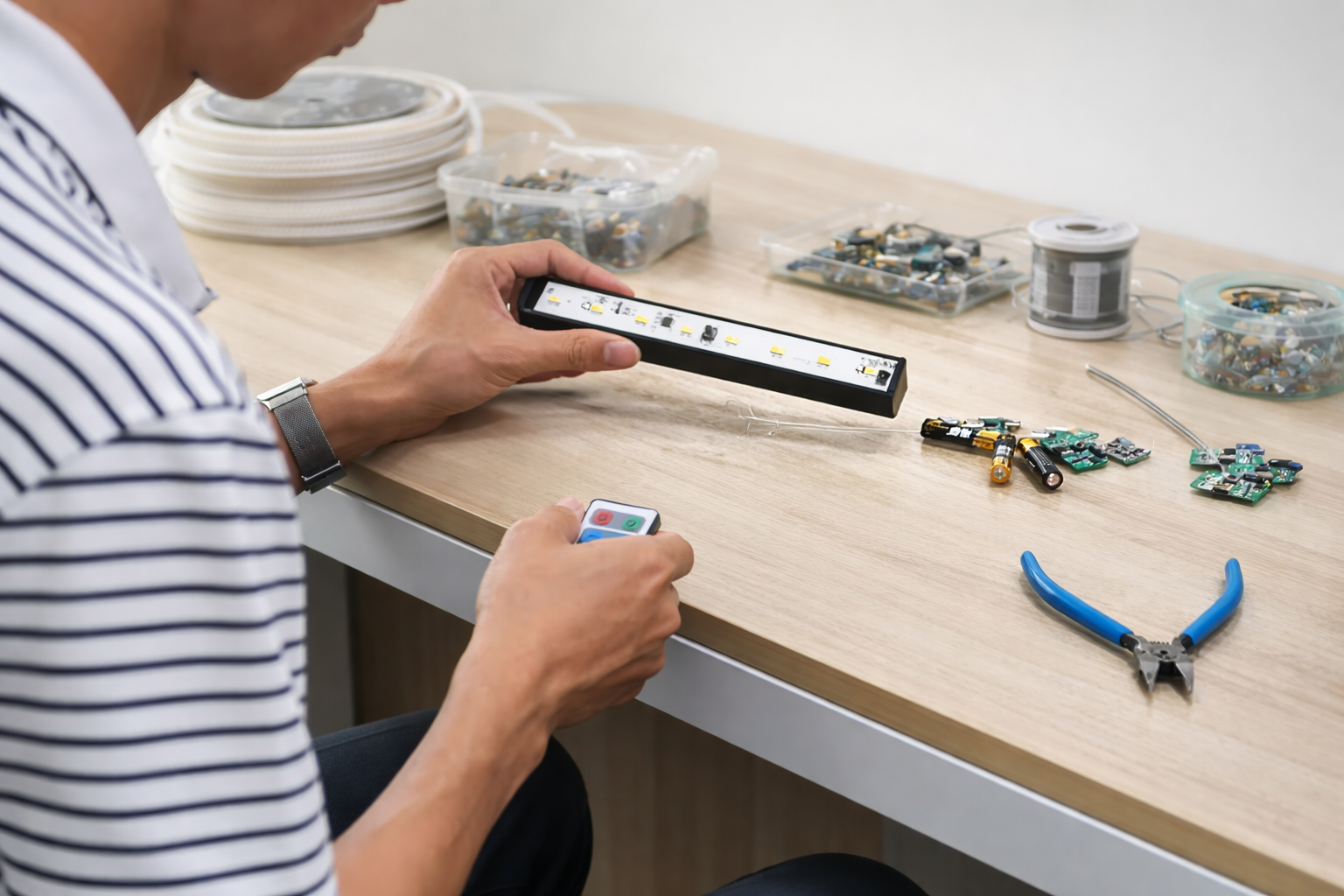
In electronic system design, the decoding characteristics, optical filtering structure, and anti-interference capabilities of the infrared receiver directly affect system stability.
If you are evaluating alternatives to the VS1838, we can provide model selection and compatibility assessment support based on your application needs. We support OEM cooperation and long-term stable supply for electronics manufacturers.

DY-1838K IR Receiver Product Parameters
- Data Sheet
- Inquiry & Supply Process
| Model | Operating Voltage | Quiescent Current | Receiving distance | Operating Temperature | Pin spacing | Product Features |
| DY-1838KW-XXX | 2.5-6.0V | 50-1200μA | 10-35m | 3-40 mm | 2.0/2.54mm | Anti-light interference,long distance |
| DY-1838KV-XXX | 2.5-6.0V | 50-1200μA | 10-35m | 3-40 mm | 2.0/2.54mm | Low power consumption,Powerful versatility |
| DY-1838KB-XXX | 2.5-6.0V | 50-1200μA | 10-35m | 3-40 mm | 2.0/2.54mm | Ultra-low power consumption, strong penetration |
| DY-1838KF-XXX | 2.5-6.0V | 50-1200μA | 10-35m | 3-40 mm | 2.0/2.54mm | Strong anti-interference capability,longdistance reception |
| DY-1838KA-XXX | 2.5-6.0V | 50-1200μA | 10-35m | 3-40 mm | 2.0/2.54mm | Narrowband decoding, resistant to WiFi interference |
| DY-1838KX-XXX | 2.5-6.0V | 50-1200μA | 10-35m | 3-40 mm | 2.0/2.54mm | Continuous decoding, resistant to 5G interference |
| DY-1838KC-XXX | 2.5-6.0V | 50-1200μA | 10-35m | 3-40 mm | 2.0/2.54mm | Continuous decoding, strong compatibility |
| DY-1838KM-XXX | 2.5-6.0V | 50-1200μA | 10-35m | 3-40 mm | 2.0/2.54mm | No AGC control |
The same package appearance can be matched with different performance configurations according to application requirements. For further support, please contact us!
Inquiry Submission
Submit your inquiry request, providing the required model, specifications, or compatible brand model (for example, VS1838B). At the same time, we can also provide basic technical information and application requirements for reference.
Technical Evaluation
Engineers will recommend suitable infrared receiver models based on the application scenario to ensure compatibility with system design and signal requirements.
Sample Arrangement
Provide engineering samples for functional verification, including reception distance, signal stability, and circuit compatibility.
Engineering Confirmation
After testing and validation, confirm key parameters and product specifications to support subsequent project development.
Mass Production Supply
Arrange stable mass production supply to support the customer’s production plan, ensuring product quality is stable and reliable.
Yes. DY-1838K is designed to be compatible with VS1838B in most infrared remote control circuits, including carrier frequency and signal demodulation characteristics.
DY-1838K operates at 38kHz, which is the most common carrier frequency used in infrared remote control systems.
In most applications, DY-1838K can be used as a direct replacement for VS1838B. However, engineers are recommended to verify compatibility during product evaluation.
Yes. The module integrates filtering and automatic gain control, allowing it to suppress ambient light interference such as sunlight and fluorescent lamps.
Yes. Sample requests are available for engineering evaluation and product development.